Woodworking Book Reviews
Stumbled across this brilliant site recently.
It is a smaller version of Carl’s main blog, which is where he writes brief yet poignant reviews of a ton of books he’s read. Obviously, he has no or grown children, or the bulk of the books he reviews would consist of such titles as The Little Engine Who Could and The Pokey Little Puppy. (Actually, that’s the only two recently – just read them each about seven times a day and you have a small sampling of my morning and evening routine with Finley…)
I love Carl’s idea of the blog dedicated just to woodworking book reviews, but I wonder if he forgot about it at some point last year. I’ve scanned through the books he’s reviewed on his main site and saw several woodworking books there, so I know he’s still actively reading and updating his blog.
It’s worth checking out if you’re in the market for some new woodworking books.
TKW
Handworks 2013
Just got the OK from the better half on attending Handworks 2013 in Amana, Iowa. Very exciting!

Handworks 2013, May 24th-25th, Amana, Iowa
Maybe I’ll see you there! Just look for the guy in the kilt…
Make Stuff, Save The Planet…
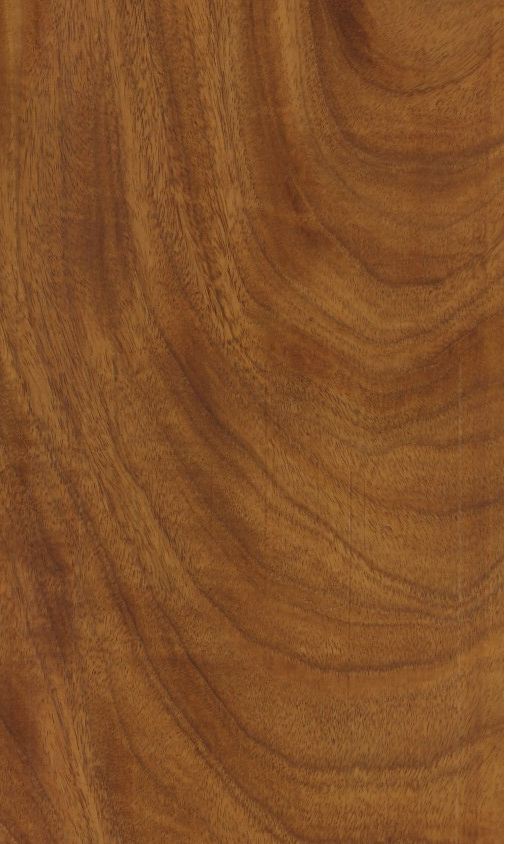
Reclaimed Honduran Mahogany
(OK, I got my wood in the mail today so now I can talk about it…)
You have two months left to make your significant other something special for Christmas, so you’d better get to it! Whenever you put time, effort, and heart into making something for them, they love it, right? Well, they will love their gift even more when you tell them it comes from an environmentally-friendly source.
For anyone out there interested in trying some reclaimed mahogany lumber from Greener Lumber, now is the time! Over the last few weeks, Rich has listed three pages of boards that are 3/4″ and 1/2″ thick at (what I consider to be) fair prices. For the small shop box maker (like me), this is great because you don’t have to worry about diminsioning your lumber to a more usable thickness.
Earlier this week, I ordered seven boards, most of them in the 6-8″ wide range and about 48″ long, with one splurge on a 12″ board for tops and bottoms. Depending on the sizes, that should set me up for a good seven or eight boxes (some of the 8″ wide boards being ripped down the middle for those boxes that only end up being 3″-4″ tall), maybe more.
You can start looking at the boards here. If you don’t like to follow links, just go to the Greener Lumber website, navigate to the online store, and look under the Bits and Pieces section under Categories.
Oh, and you should do it soon, before the Kilted Woodworker has time to sort through his package more closely and gets the bug to pick through the rest of the 1/2″ mahogany for sale and buy a few more boards.
A quick note about ordering: I’m not sure if he’s fixed it yet, but there was some kind of problem with the shipping calculator. It listed prices that were more than three times the actual shipping cost. So you might want to contact Rich before you place your order to find out what shipping would be for your order. He’s very easy to work with and will make sure you don’t get overcharged for shipping costs.
And if you’re lucky enough to live just 75 miles away from Mexico, Missouri, you can have your environmentally-friendly mahogany lumber in hand in less than 48 hours. 😀 (Your results may vary.)
The game is afoot, gentle woodworkers. Good luck!
Should I Shave Or Should I Go Now?

Cast Iron File Handle
Last weekend, I went to one of the local tool auctions (the only tool auction?) in my area that takes place like three times a year. I was in the market for a cast iron file handle and didn’t feel like paying the $29 or $39 eBay price. I knew they had one listed for this auction and figured I’d be able to get it for less.
When my item finally came up, I was dismayed to see the previous item received no bids, so it got tossed into the lot I was bidding on. Blergh. I hate buying junk I don’t want. But what can you do? So when I picked up my cast iron file handle (for $7.50 – suck it, eBay!), it came with a beat up sharpening stone.
Those old stones at auctions are usually oil stones so old and dished they hold water. Not that you’d want to even pick them up, they’re so grimy and disgusting, much less drink from them. Hence, I received my flat of items (there was also an old Millers Falls marking gauge/depth gauge and a tiny little Millers Falls ratcheting flat screw driver in the group) with some disdain.
After the auctioneer got to a point where I wasn’t watching for any of the next hundred or so items, I glanced down at the grungy stone and raised an eye brow. Oh! It was a water stone. And it had a label on it!

“Light Green”
Later that evening, I cleaned up the water stone with my 220 DMT. It made some nice slurry and I had to pry the flattening stone off of it more than once. It made me think it was a higher grit finishing stone. So I got on-line and started researching the label, which simply read “Light Green”.
After about 15 minutes of research (which included some time on a forum for people who shave with straight razors, called straightrazorblade.com), I was pretty sure of what I had. Turns out that grungy water stone I’d never given a second look was a Light Green Escher hone, estimated at about 12,000 grit, and used as a finishing hone primarily by barbers and men who shave with straight razors. Oh, that’s cool.
Apparently, this wonderful stone is the crème-de-la-crème of straight razor hones. Not only that, but they are highly sought after because the quarry they came out of in Germany can no longer mine them due to nature preservation laws. And a nice-sized stone, in good condition and with labels, can go for more than $300.
Wait, what? That piece of junk stone I paid $1.875 (when you divide $7.50 by the four items in the box) for is worth over $300?!?!
Nice.

Escher Light Green Hone
Too nice, apparently, for use in woodworking. An inquiry on the straightrazorblade.com forum was responded to by several guys who said it would be a crime to use the stone for anything but straight razor honing. They suggested I sell it (I’m sure to one of them… at a discounted price because I got it for such a good buy) and use the money to buy some nice woodworking tools.
A part of me says, “Screw them, I’ve got myself a new finishing stone for my smoothing planes.”
Another part of me says, “Screw THAT, I’ve got myself a tidy little profit of $300 or more if I sell it!” (Oh, Wayne Anderson, your plane just got a little closer to reality!)
And, then, a very little part of me says, “I wonder how hard it is to learn how to shave with a straight razor…”
Book Review: The Man Who Planted Trees

The Man Who Planted Trees by Jean Giono
The Man Who Planted Trees
By Jean Giono
This month’s book review is a little break from the norm. The Man Who Planted Trees is a work of fiction. And there is no sub-title of, “… and then he used the lumber to make…” It isn’t a book about building tables or chairs or boxes. It isn’t the final word in cutting dovetails, or even a comparison of dovetail cutting techniques. And there isn’t one mention of any kind of hand tool, other than an iron rod about four and a half feet long. Instead, it is a story about reflection, hope, and power. It is an illustration of how just one person can make a difference. It is an allegory about preserving and renewing the natural resource we all love to touch and smell and work with, long before it is cut into lumber.
The hardbound copy I have is the 20th Anniversary Edition, printed in 2005. It is illustrated by Michael McCurdy with some amazing wood engravings. If you chose to read this book, please don’t forget to spend some time looking at them – the detail and design is fantastic. I’m not sure about other editions, but this one is printed on 100% recycled paper and has a stitched binding.
The story is narrated by a man who first meets a shepherd in a barren land in Provence, France, in 1910. That night, the man watches his host sort out acorns. The next day, as they walk along a hillside, the shepherd uses an iron rod to make holes and plants 100 oak trees. He had been planting trees like this for the last three years and his count was up to one hundred thousand by that time. Of those, twenty thousand had sprouted and he expected to lose half of them to the processes of nature. But that left him with ten thousand oak trees growing where nothing had been before.
Our narrator returns to the barren land periodically to check up on the shepherd. He finds the old man has continued planting trees – birch and beech, this time – and comments on the changes the forest has brought to the land. Creeks once again flowed with clear, clean water. Hunters occasionally strolled the wooded area, looking for hare and wild boar. Mother Nature helped out with her own plantings of flowers, undergrowth, and meadows ; all she needed was a place to start. And, finally, he returns to find a thriving community – a village of 28 inhabitants, new houses and farms, and fields of barley and rye.
This is a work of fiction. But it is based in fact, as is evidenced by the foreword from Nobel Peace Prize laureate Wangari Maathai and the afterword from Andy Lipkis, founder of TreePeople. The idea of planting a forest to revitalize a community – to bring water back to dry wells and streams, to renew depleted soil, to restore the natural environment – is something we should always carry with us in the back of our minds. With that, we should remember that we, as individuals, can make such a change happen.
Read the book the first time through for the enjoyment of the story. Read it through a second time to take in the wonderful wood engravings. And as you read through it a third time, start asking yourself what you can do in your life to facilitate such a change on our planet, whether it is planting your own forest or making a contribution to one of the many forestation projects and organizations out there. Not sure what you can do? Fret not, fellow woodworkers – there is a section in the back of the book (page 55) that helps you get started.
It is also possible to read just the story on-line, if you so chose. You can find it here. But you miss out on all of those wonderful wood engravings and the additional information in the back.
Book Review: Chisel, Mallet, Plane and Saw

Chisel, Mallet, Plane and Saw
I first heard about Tony Konovaloff through Chris Schwarz. He mentioned Tony and his new book in a recent blog entry, and indicated he was helping Tony sell it through Lost Arts Press. So I hopped over to Tony’s website and digitally thumbed through it to see what he was about. I liked what I saw, took a chance, and bought his book.
It arrived a few days later and I sat down with it over my next lunch break to give it the initial once-over. For starters, it is a paperback book, a good size (7” x 9”), and it has a high quality stitched binding. I did not worry at all about breaking the spine when I used my iPad to hold it open while I ate lunch and read. The photography and art work, including the front cover, is all black and white.
The quality of the photographs is… not bad. I wish some of the shots had more detail, less background, or better lighting. But this does not bother me, because I know Tony wrote and published this book himself. He took most of the photographs, as well. I’m willing to forgo a little bit of quality for the determination someone displays in publishing their own book.
The text reads fairly smoothly. There are a number of minor grammatical errors throughout the book, but none so bad as to make the content illegible or easily misunderstood. As a technical writer/editor by trade, it is my job to review any text with an editor’s eye. It is not a function I can easily turn off. So while many of these errors may pop out at me, it is likely true most people will not even notice them. In the end, the content is clear and understandable, and that is really what counts.
The book opens and closes with the author’s say so on certain topics. He speaks his mind, no holds barred. I love it when an author does this. He is not wasting his time writing about things for which I do not care and I am not wasting my time reading those things. He tells us how he does it. He readily admits there are other ways, maybe even better ways for someone else, but these are the ways he likes to do it and so these are the ways he does it. And he speaks with 25+ years of real life furniture-making experience, which carries a lot of weight with me.
As an added bonus, there is plenty of dry wit and humor (think: Frank Klausz) sprinkled throughout the pages to help keep the book from being too dry and preachy. He comments at one point in his opening say so that he wants to tell us how he does things, “without leading you by the handtool.” It took me a bit more reading to determine if he was being witty or if someone had edited with an over-zealous Find/Replace function. Turns out it was the former.
If you’re looking for a book with step-by-step projects and tear-out plans for some of the furniture he discusses in the later chapters, then you’ll have to look elsewhere. Tony does not include plans or cut lists because he does not use them in his own work (I dare say he does not think you should use them, either.) Besides, that is not the purpose of this book. I found it to be a book on the philosophy of using hand tools, more than anything.
He does discuss hand tool techniques in various locations throughout, but I would not list that as a selling point of this book. The techniques he tries to break down would be better handled with more descriptive text and additional photography or drawings. In his defense, I do not think he was trying to write a book on how to cut dovetails or provide us the step-by-step process for making a four-square board.
Instead, I think Tony’s purpose in writing the book is to open more people to the idea of having a quieter, more peaceful shop environment, where you do not have to worry about speeds any faster than the rate of the minute hand on the clock. He is pushing you to imagine what it would be like to work, not with industrial-sized ear protection pinching your head, but with pliable ear buds trickling your favorite music off of your iPod. He is daring you to work in your basement at 11:00 at night without fear of waking a two year old child.

My best project yet…
Which brings up one more point… As a new father, I try to think to the near future, when my son might want to start joining me in the workshop, either just to be with me as I work or maybe to pick up a hand saw or chisel and test his own creative senses. It was encouraging to read about Tony’s boys and how they spent time in his shop when they were little and how they spend time in his shop now that they are older.
But, maybe most importantly, I think Tony wants us to start caring about the woodworking we produce. If we do not put a bit of heart and soul into our projects, then the people who receive our finished piece won’t be able to find it in there, either. We cannot be a disposable society forever; people need to care about how things are made again! In order to do that, we need to care about how we make things.
If I was not already convinced to try and use more hand tools and fewer power tools in my shop, he makes several compelling arguments. And it is a joy to read the words of someone who is so free with his opinions. I imagine Tony is not one to beat around the bush or walk on eggshells in any aspect of his life. I understand; I try to approach most things in life that way, as well.
Thank you, Tony, for providing us the insight into your woodworking life. It was a pleasant read and I have added your book to my Woodworking Philosophy bookshelf, to be taken down often for future reading. Let me know if you ever want to publish a second edition to get some of those grammatical errors fixed; I’d be happy to lend you a handtool.
Finishing End Grain
Raise your virtual hand if you’ve ever put a finish on a piece of wood.
(Hopefully, that snagged pretty much every reader.)
Now keep your virtual hand raised if you’ve ever worried about the finish on your end grain being darker than the finish on your face grain.
(Do you still have your hand up? If so, read on…)
When I first started building things with wood, one area I always struggled with was the finish. It never seemed to go on easily. No matter what kind I tried – varnish, shellac, polyurethane – I never achieved the kind of finish I felt I should have. One of the things that bugged me more than anything else was having any exposed end grain end up significantly darker than the face grain. So I read up on it on-line to see if I could figure out what my problem was.
The first thing I learned is that it had nothing to do with the kind of finish I was using. You can achieve a bad finish with any of them! And you can achieve a good finish with any of them, as well! The most common answer I found was that I needed to sand the end grain with a higher grit than I used on the face grain. But this gave me more questions than answers. How much higher of a grit should I use? Can I use too high of a grit? How do I know when I’ve sanded enough?
It raised enough questions I started to doubt that answer, so I decided to figure it out for myself. I pulled out a few scraps of wood and treated them like they were finished projects. I experimented with different sanding techniques, but I limited myself to one of the finishes I’d come to love – General Finishes Armor Seal – in order to simplify the process. With four or so different grits in front of me, I went to work on my test pieces, sanding and taking notes and applying finishes and taking more notes.
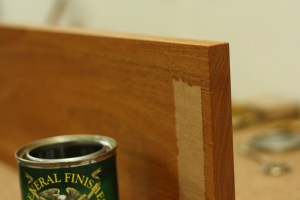 In the end, it turned out the solution was quite easy. The key to achieving an even finish on your face grain and your end grain is that you just have to sand it enough. If it is important not to skip grits when sanding your face grain, it is imperative you don’t skip grits on the end grain! Sand until you have uniform scratches of the grit you’re using, then move on to the next grit and sand until you have completely uniform scratches of that grit. Continue working the end grain right along with all of the faces of your boards. After a bit of practice, I figured out what to look for and it became quite easy to tell when I’d sanded enough.
Today I have a stack of high grit sand paper I rarely touch because I never use anything over 320 grit on wood anymore. And I never have to worry about my end grain being darker than my face grain. Still have doubts? Check out the picture. All three sides of that mahogany board were sanded to 320 grit and I have a nice, even, uniform color on the face grain and the end grain. Now what do you think? Give it a try on your next project. I think you’ll be happy with the results.
A Different Kind Of Hand Tool…
In the mid 1800’s, this potato ricer was brought out to a budding ranch in Wyoming. For well over 70 years, it remained there in a log cabin, doing the one thing it did best – extruding cooked potato through little holes barely larger than a grain of rice. Life as a rancher in Wyoming wasn’t easy. It involved hard work, from sun up to sun down, day in and day out. But the ranch owners survived and prospered. At some point in the early 1900’s, the ricer was passed down to the ranch owner’s granddaughter. Battling through her own great trials and tribulations, she and her husband eventually settled into a comfortable life in the Midwest, just east of Kansas.

Ye Olde Potatoe Ricere
In the early 1960’s, a young man and his new wife moved to Kansas City so he could attend medical school. They had plans on what they wanted to do with their life; not big plans, but plans none-the-less. After he received his medical degree, they wanted to move back to his home town of Washington, MO, open a family medicine practice, and work a farm. Only, they had no idea how to operate a farm, so they started looking for someone to teach them while he was in school.
Through a series of fateful events, they found themselves in touch with a middle-aged couple from Wyoming, who lived just north or Kansas City in the small town of Platte City, MO. The older couple took the younger one under their wings, teaching them the basics of running a farm, like operating a tractor and butchering a steer. Some lessons, like just how much gravel a pickup truck can handle, were learned the hard way. They would reap the benefits of many of these lessons for more than 50 years.
Several years later, medical school finished and a degree in hand, a farm just outside the new doctor’s hometown was found and purchased. Packing up to move back and begin the next phase of their life, they were presented with a few gifts, one of which was an old potato ricer. After several more years of use, convenience became the necessity of a busy household and the ricer, once often-used and well-loved, was relegated to a box in the top shelf of the pantry. After all, it takes a lot to keep three young boys working on a farm from dying of starvation.
There it sat for more than 20 years.

Shameless Finley Plug
Last weekend, one of these no-longer-young boys brought his own son down to the farm for a visit with the (now) grandparents. After a time, Thanksgiving plans were discussed. The son agreed to bring mashed potatoes and a pumpkin pie, but lamented the abuse his cheap pressed-aluminum potato ricer would take at extruding over 10 pounds of potatoes.
“Why don’t you just use a mixer?”
“Because I like to use hand tools, mom. Even when I cook.”
The mother thought for a minute before heading into the pantry to dig through an old box of kitchen utensils.
“Then take this,” she said, pulling an old potato ricer out of the box. “Mom Perry would be pleased to see it back in use.”
…
And so this American-made potato ricer with a cast-iron handle and tin basket traveled another 50 miles that day. With some minor scrutiny, you can make out a hard-to-see impression on the top handle that reads, “Cin’ty Galv Co.” The underside of the bottom handle reads, “King, Seamless Cup-Press”. Traces of a dark green paint remain on the handle and in little nooks and crevices.
Though it looks simple in design, it does have some robust features that set it apart from anything you can buy today. The handles are substantial and smoothed so that they don’t pinch your palm or thumb. The press plate is cast iron, as well, and won’t crumple under the intense pressures one can achieve squishing cooked potato. The cup seems to rest on a rim, but will not fall out of the ricer unless two tabs are lined up with the handle properly. After sitting unused for 20 years, it just needed a quick scrubbing with soap and water and it was ready to be put back to use.
As I stood at the kitchen counter later that evening, wiping down the cast iron with a light coating of butcher block oil, I could feel the life returning back into this 150+ year old device. It almost pulsed with energy as memories flooded my brain. I thought back to the many visits made during the summers of my youth to an elderly couple I’d only ever known as Mom and Tom Perry. I recalled chipping crinoids out of a rock formation with my mom – my first taste of “being an archaeologist” and the only place in Missouri I’ve ever found such fossils. I remembered being awed at the sight of thousands of tobacco plants hanging to dry in a two-story barn (and getting chewed out for sneaking into the tobacco barn). And my mouth watered at the thought of good home-cooked food, just like my mom makes.
(I didn’t know until much later that it tasted like my mom’s cooking because Mom Perry is the one who taught my mom so much about cooking.)
With a feeling of contentment, I put the ricer away and smiled.
I have a feeling the mashed potatoes are going to be good this year…
NYPD Pipes and Drums Box, Part 3…
With a baby in bed, a wife out socializing, a broken router (er… I have no internet access at home, not a broken tool), and the Cards en route back to St. Louis, I had a great opportunity last night to slip down to the shop and work on the box a little more…
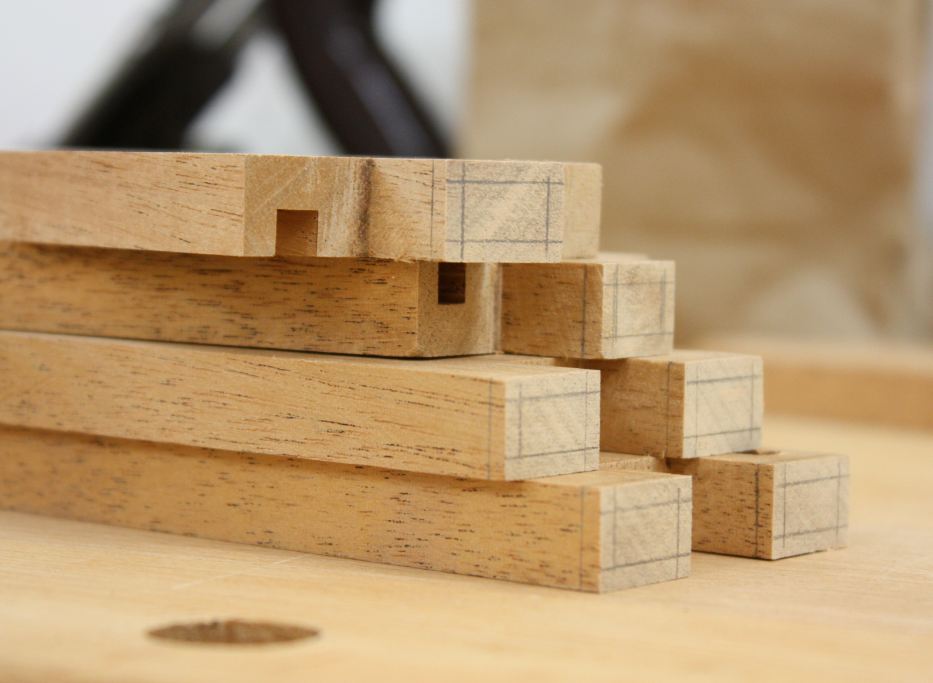
Sanding guidelines are in place...
The goal for the night was to round/pillow all of the edges of the protruding box joints. I didn’t want to round them past where the joint forms, so I used a pencil to indicate where I needed to stop on the long grain sides of each board. Then I wanted to make sure and round them all as consistently as possible, so I marked a distance off (as determined by my test pieces) on the end grain for all four sides of each protruding box joint.
With my guidelines in place, I grabbed a fairly thin piece of scrap wood (ended up being about 3/8″ x 3/4″ x 6″), some 220 grit sticky-back sand paper (didn’t want anything too aggressive), and made a small sanding block to work the corners.
Then I sanded.
… and sanded.
… and sanded.
I knew this would take a while. I also knew I could have started with a lower grit and worked faster, but I wanted to maintain control of the sanding and not go too far. You can always take more off, but it’s a fair bit harder to put it back on.
I ended up playing through all three Mumford & Sons albums (the US release, a UK live version, and one called B-Sides/Unreleased) twice. At least I had good company while I worked!

A dry fitting of the joint...
The end result wasn’t too bad. Pretty much what I was shooting for, too. I’ll come back and hit it with some 400 grit sand paper backed with fingertip pressure to smooth it out a bit more. Since the joint is a highlight of the piece, I’m not concerned with the end grain being darker than the face grain, but I do want it to have a nice clean appearance.
But the real question is this: If I chose to repeat this style of box construction, how can I reduce my sanding time? I might be able to work some of the corners a little after the boards are cut to proper length but before I cut the joints in them. I’m not sure I want to try and use a plane of any kind on them after the joints have been cut because there are way too many speltching opportunities there. I DO have an old Rockwell sanding disk (it uses a pulley; it isn’t a direct-drive machine) I picked up on Craig’s list a few years ago and have yet to set up. Might be a good opportunity to get it put together and into use.
Once I’m done with sanding the joint ends, I’ll finish the installation of the half-mortise lock. That is, I’ll drill my pilot holes for the screws and make sure it seats properly and then work on the key hole. I’m not yet sure if I’m going to add an escutcheon to this lock or leave it alone. I’m dealing with some pretty thin wood in that area at this point, so if I do, it might either just be a really, really thin piece, or it might extrude slightly from the face of the box. And then what material should I use? Maybe some bog oak? Or… I have some really great satinwood (the real stuff, like what the English used back in the day) I’ve been dying to put into a box. Or maybe a satinwood diamond shape outlined in bog oak? Decisions, decisions…
Once I figure that out, I’ll tape off my joinery and finish the inside of the box before I cut the bottom to size and glue up the base of the box. Then it’s off to design the lid. (This is kind of a free-flow design I’m working on – I have a general idea of what I want, but will need to play around with some mock-ups before I decide on anything, which is why this box is taking so long…)
NYPD Pipes And Drums Box, Part 2…
So let me start off by saying that you cannot use a Record #043 (or any grooving plane, really) to make a stopped groove. Didn’t take me but a few passes to realize the skate was going to cause issues with that.
(EDIT: This is slightly inaccurate. I should say, “you cannot use JUST a Record #043 to make stopped grooves”. Not sure why I didn’t think to use my little #271 to finish up what I couldn’t get with the plow plane before… Also going to research quirk routers and carriage maker planes a bit to see how they might work.)
Ah, well. Blended shop it is… out came the palm router with the 1/4″ bit. After a few minutes of setup, it was ready to go and the grooves were grooved. Can I get back to my iTouch now?
Then… life happened. Nothing big, just… life. Things to do, baby gets sick, family visits – you know, “life”. My other worldly challenges seem to be severely impacting my ability to get into the shop with any regularity these days. I find maybe an hour or two in a week to get down there. And sometimes I end up just cleaning or doing some organization or… sharpening of tools. And an hour isn’t enough to make headway on most of that, much less also work on the current project on the bench.
Last night I listened to Game #3 of the World Series (again… nice to be in a “hand tool mostly” shop) while I mortised the lock for the box. Ugh. Talk about nervous. The easiest time to mortise such a lock is when the box is not yet assembled. I just get a bit antsy doing work like this when I’m already behind schedule and really don’t want to cut a new board if I mess it up.
But slow and steady wins the race, as they say. (You know… “them”.) It helps that I use higher quality locks from Whitechapel LTD; they are made in England and somewhat costly, but the relative ease of installation is worth it, as is the good feeling I get from knowing I’m using quality products. When it comes to my woodworking, I avoid anything with “Made In China” located on it at all costs… even if it means passing a higher product price on to the customer.
Take your time, use a sharp marking knife, score lightly the first few passes, then remove the bulk of the waste with whatever method suits you. I chose to chop it out with bench chisels. It was mostly paring with just the occasional chopping, so I didn’t miss Pujols’ first home run.
Or the second one.
Or the third one, for that matter. 🙂 (It would probably be easier to motivate myself to find shop time if I got to listen to a game like THAT every time!) Then remove the final bit with a small router, like the Stanley #271.

The #271 makes it look nice and clean...
I started with the recessed bit on the edge of the board. Made a few light chops, then picked up the #271, set the depth (using that part of the lock itself to get the proper depth), clamped two pieces of scrap side pieces to either side of the area I was mortising (to better support the #271) and cleaned out the waste. It was remarkably easy and much safer and quieter than the palm router.
Then I worked on the mortising of the inside face (this is the part that is easier when the box is not assembled). First I worked on the deeper inside mortise so I could still use the other area to further support the #271 when I was cleaning out the bottom of it. Then it was the top two ledges where the screws will mount it to the box. Before it can be pressed into place, you have to drill the hole for the lock pin. I used a pencil to put a bit of graphite on the pin, lined it up as best I could, and pressed it mostly into place. When I removed it, a small indentation with a smudge of pencil lead showed me where to drill.

Ahhh... success.
If you take your time, think it all out, and enjoy the process, you end up with something like this…
… and that’s a good thing.
(Oh, come on… when you do something this nice and neat, it only seems fitting to channel Martha!)

 thekiltedwoodworker